Published post
How to Turn One AI Prompt Into a Week of Content
Learn a practical workflow for turning one strong AI prompt into multiple content pieces for blogs, short videos, captions, and social posts without repeating yourself.
One of the biggest mistakes people make with AI is using a prompt only once. They write one good instruction, get one result, and then move on to the next idea. That approach wastes time and makes content creation feel harder than it needs to be.
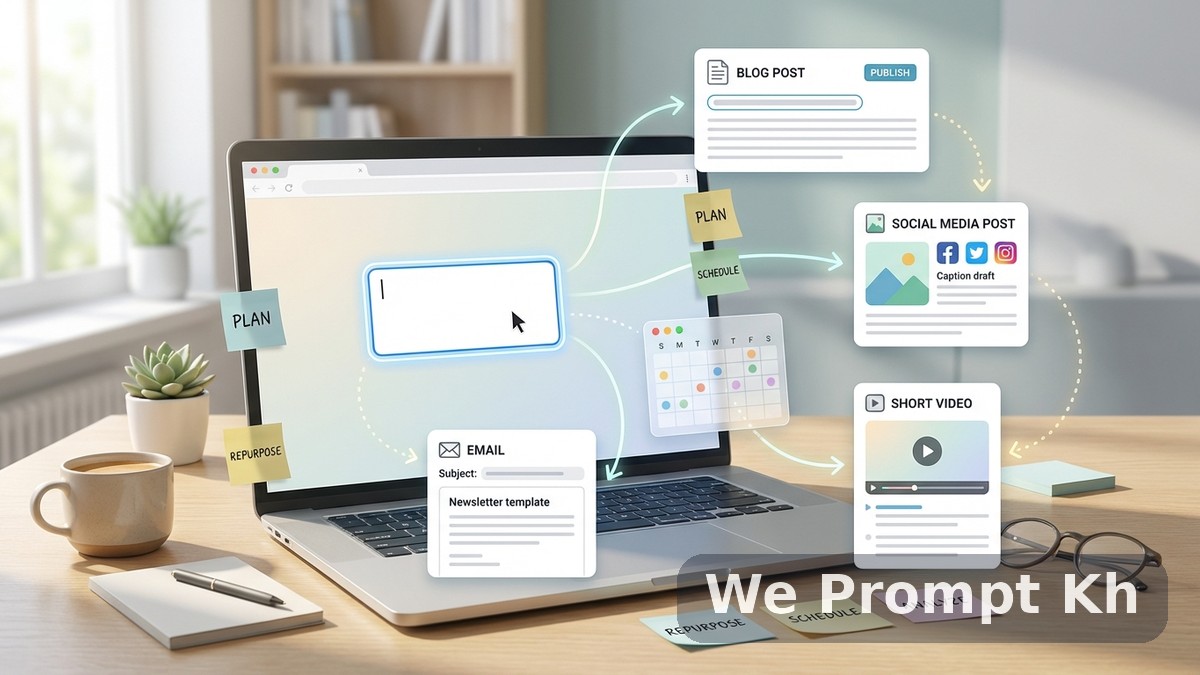
A stronger workflow is to treat one solid prompt like a content engine. If your prompt is clear enough, you can reuse its core idea across multiple formats and turn it into a full week of useful content. This approach is practical for bloggers, social media managers, prompt sellers, and small business owners who want more output without lowering quality.
Start with one clear core prompt
The first step is not writing ten prompts. It is writing one strong one. A useful core prompt should have a clear goal, a clear audience, and a clear output format. For example, instead of asking AI to “write about marketing,” you might ask it to explain one marketing idea for beginners, give an example, and keep the language simple.
A strong prompt gives you a stable starting point. Once you have that, you can adapt the same idea into several different pieces of content.
Turn the main idea into a blog post
The first and most detailed format is usually the blog article. This is where you expand the idea fully. Let the AI help with structure, but make sure you shape the final article with your own judgment. A good article should explain the topic clearly, include examples, and answer practical questions the reader may already have.
This longer version becomes the foundation for the rest of the week’s content. It gives you language, examples, and smaller ideas you can later reuse.
Pull short posts from the same idea
Once the article is written, you can extract smaller pieces from it. A short LinkedIn post might focus on one insight. A Facebook caption might share one lesson in simple language. An Instagram caption might turn one key point into a short visual-friendly explanation. A short video script might explain the same topic in 30 seconds.
This is where AI becomes especially useful. You do not need a brand-new idea for every platform. You only need a different angle on the same idea.
Create a practical content stack
A simple weekly stack from one prompt might look like this:
- 1 full blog post
- 1 short video script
- 2 social captions
- 1 email tip
- 1 checklist or carousel idea
That means one good prompt can support five or six pieces of content instead of one. This helps you stay consistent without constantly starting from zero.
Keep the message consistent
Reusing a prompt does not mean repeating the exact same wording. The goal is consistency of message, not duplication of text. The blog version can be detailed. The short video version can be more emotional. The social caption can be punchier. The email version can feel more personal. Each piece should serve its own format while keeping the same central lesson.
Add your own experience
The easiest way to keep AI-generated content from feeling generic is to add your own perspective. Include a short opinion, a real example, or a practical mistake you have seen before. This makes the content more useful and more believable. It also helps separate your work from low-quality prompt spam that simply republishes raw outputs.
Why this approach works
Turning one prompt into a content system saves time, improves consistency, and reduces creative pressure. It also helps you build a more useful content library because your ideas are explored from different angles instead of being thrown away after one use.
If you want better results from AI, do not ask it for random output every day. Build one strong prompt, expand it carefully, and turn it into a full content workflow.